

The future is frictionless. Are we ready for that?
A short note before we begin: I usually write about product design and entrepreneurship. This piece is different.
Living in an age where AI increasingly removes effort from our daily lives has pulled me into a different kind of question — not how we design better tools, but how those tools might quietly shape how we live.
It's strange how quickly the future becomes invisible.
Things that used to take effort — even small decisions — now just… happen. We tap. We swipe. We delegate. The friction disappears, and life gets easier.
But something else shifts too.
Not in a dramatic way. Nothing collapses or breaks. It's subtler than that. A quiet sense that something we once had to do is now handled for us. And once you notice that, the usual way we talk about technology starts to feel slightly off.
We often ask where technology is taking us. But that framing gives it more agency than it actually has. Technology doesn't take us anywhere. It removes obstacles. And when the obstacles are gone, we're left alone with our choices — because once effort disappears, intention is what shapes our lives.
Which brings me to WALL·E. I rewatched it recently, and it hit differently this time. Less like satire, more like a documentary filmed ten years early.
What makes it land isn't catastrophe or villainy. It's comfort. In WALL·E, nothing is broken. Nothing feels threatening. Life has been designed to remove inconvenience entirely. People are safe, entertained, and cared for — and because of that, they gradually stop directing their own lives.
They're alive. But they've stopped choosing anything.
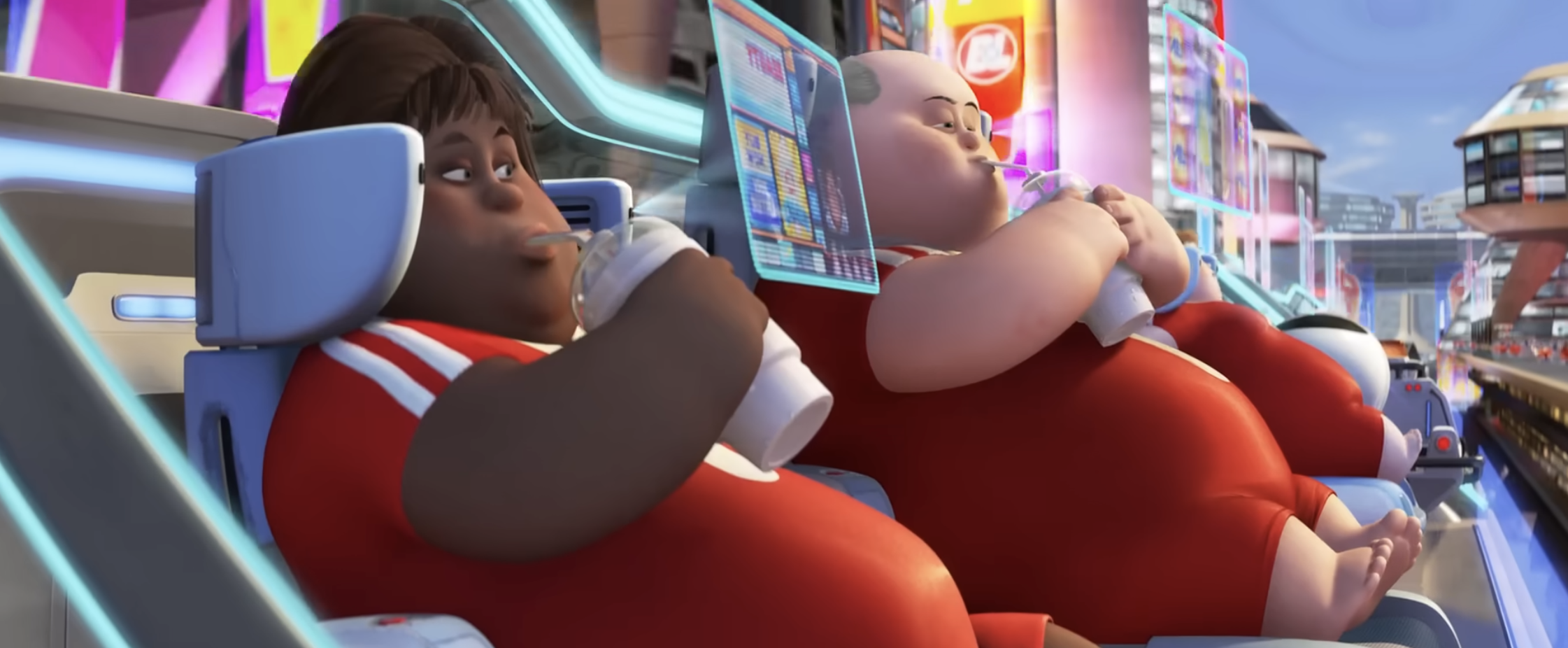
Humans live passive lives. They’re simply present.
The uncomfortable part isn't that this future feels extreme. It's that each step toward it seems perfectly reasonable.
We already live inside systems designed to reduce effort. Algorithms decide what we watch next, which route we take, which message gets drafted. We skim summaries instead of reading. We let automation handle things we used to think through ourselves.
But taken together, it creates a kind of momentum. Every new convenience is framed as progress — something we'd be foolish to resist. And slowly, almost without noticing, active participation starts to feel like an odd choice rather than the default.
When ease becomes the default, engagement quietly turns optional. And once it's optional, it doesn't vanish all at once — it just fades.
It's tempting to frame this as a character flaw. To say we're becoming lazy, disengaged, passive.
But laziness isn't a moral failing. It's a predictable response to systems built to remove effort. When everything around you is optimised for speed and convenience, choosing the easiest path isn't weakness — it's rational. Why do mental maths when a calculator is right there? Why memorise a route when your phone already knows it?
Over time, those small concessions compound. We stop doing things not because we've lost the ability, but because we so rarely need it that the muscle quietly atrophies.
But that isn't the only way this story plays out.
There's another vision of a highly automated future, and it feels fundamentally different.
In Star Trek, machines don't diminish people. They create space for them. Survival is largely solved. Scarcity doesn't shape everyday life anymore. And because of that, people aren't driven by necessity — they're driven by curiosity.
They explore. They study. They build. They pursue mastery not because they have to, but because they want to.
There's a small detail in Deep Space Nine that I keep thinking about: Captain Sisko's father, Joseph, runs a restaurant on Earth. Not to earn a living — money doesn't really exist in that world — but because he loves cooking. He does it for the craft, for tradition, for the pleasure of feeding people who walk through his door.
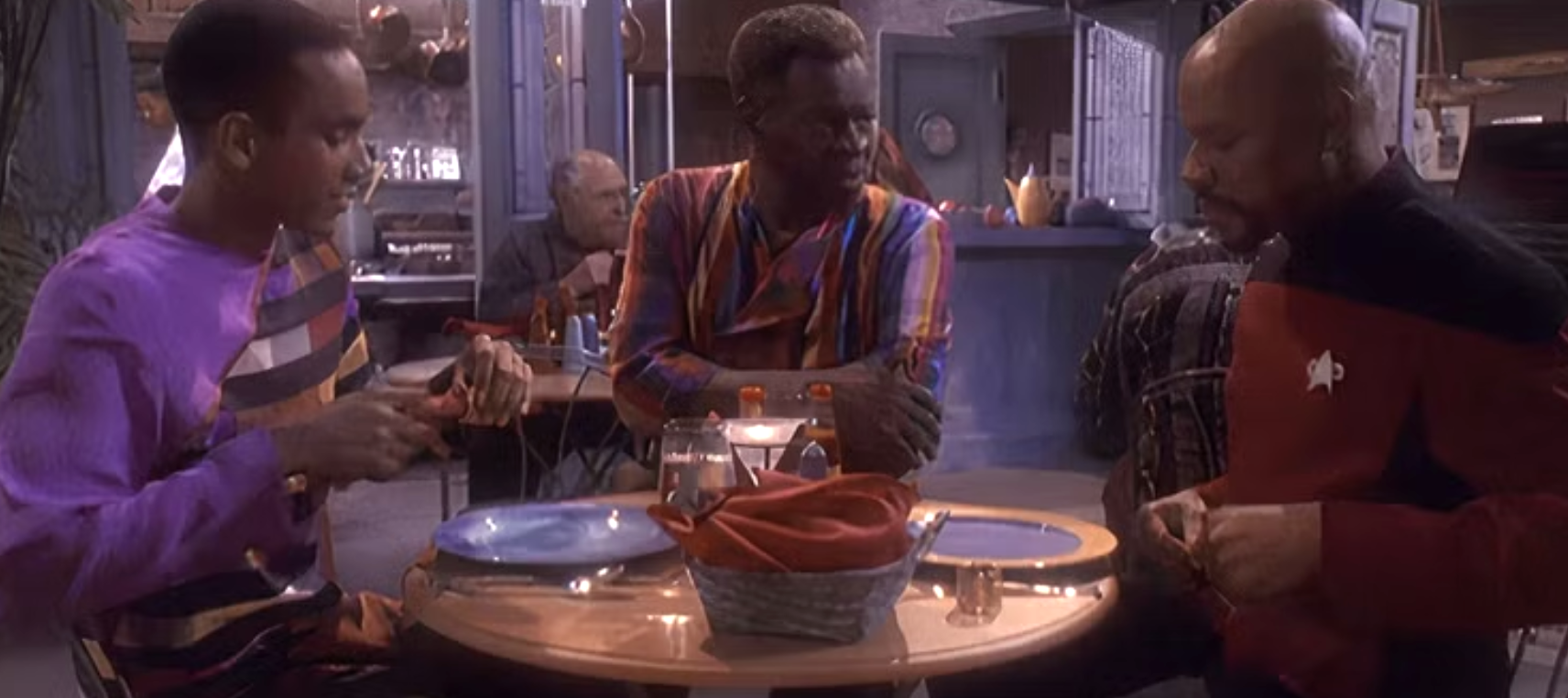
Humans live passionate lives
Technology doesn't define who these people are. It just supports who they've decided to become.
In that version of the future, friction isn't gone because life is empty. It's gone because the drudgery that used to consume human energy has been deliberately cleared away — leaving room for something more interesting.
Much of the anxiety around AI focuses on loss: jobs, skills, relevance, creativity. We're constantly told what's at risk.
What gets less attention is the flip side. AI also gives us time — enormous amounts of it. Time that used to be eaten by calculating, coordinating, and just keeping our heads above water. But time on its own doesn't come with instructions. When effort is no longer required, meaning doesn't automatically rush in to fill the gap.
If anything, AI doesn't steal purpose. It reveals whether we had much purpose beyond staying busy.
We're often at our most inventive when we're solving hard problems. Necessity and invention, and all that. Pressure forces clarity. Constraints demand creativity.
But what happens when those constraints lift? When the problems that once stretched us are handled by machines?
These aren't technological questions. They're human ones.
A frictionless future doesn't condemn us to passivity. But it makes passivity the path of least resistance. And that path has a quiet pull.
The real risk isn't that machines will think for us. It's that we might gradually stop bothering to think for ourselves — trading effort for comfort, depth for convenience, participation for consumption. Not because we're forced to, but because nothing demands otherwise.
Automation will keep advancing. That much seems clear.
The harder question is simpler than it sounds: now that survival takes less effort, how do we actually want to spend our lives?
The future may be becoming frictionless. What we do with that is still ours to figure out.
